

Is Scotts Valley a good market for short-term rental investment in 2026, and what are the current STR permit rules you need to know before buying?
Scotts Valley offers structural rental demand thanks to its position between Silicon Valley and the Santa Cruz coast, but you need to navigate city-specific STR permit rules and high acquisition costs before committing capital.
Why Scotts Valley Short-Term Rental Investment Matters Right Now
The Santa Cruz County real estate market is sending mixed signals to investors in late 2026. The county-wide median sales price for existing single-family detached homes sat at $1,370,000 as of August 2026, per the California Association of REALTORS, down 1.9% year over year. At the same time, only 16% of county households can afford to purchase at the median price, according to C.A.R.’s Q3 2026 Housing Affordability Index. Most households in this county are priced out of buying at the median.
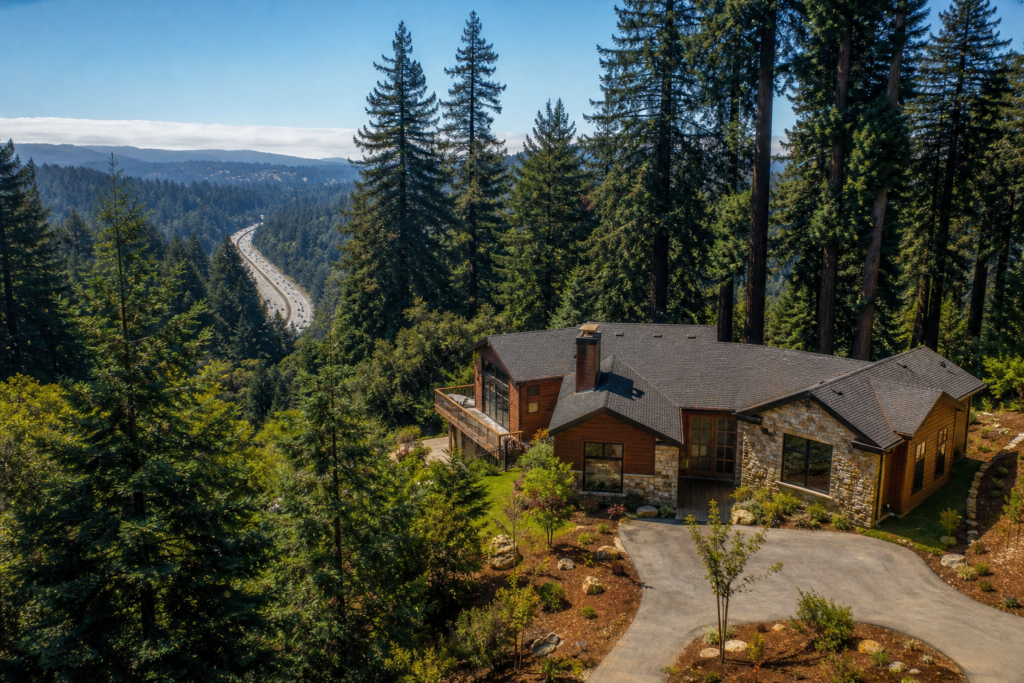
What does that tell you as an investor? Ownership is out of reach for most local households, which is one factor supporting long-term rental demand. Short-term rental demand depends more on visitor and business travel, and it deserves its own analysis. Scotts Valley, in the Santa Cruz Mountains along Highway 17, is positioned for both: close enough to the coast for leisure visitors and directly on the primary commuter corridor into Silicon Valley for business travelers. That dual demand profile is what draws STR investors’ attention.
Understanding the Scotts Valley Market for STR Investors
Before you run revenue projections, you need to understand what you are actually buying into. Scotts Valley is an incorporated city within Santa Cruz County, and as an inland community, it typically trades at a different price point than the coastal neighborhoods of Santa Cruz proper. County-wide data is the finest resolution available from authority sources, so the $1,370,000 August 2026 county median serves as a ballpark for acquisition costs.
Here is what the competitive landscape looks like at the county level, per C.A.R. as of August 2026:
- Months supply of inventory: 4.6, meaning the market still leans toward sellers
- Median days on market: 15 days, indicating properties move quickly
- Minimum qualifying income: $332,400 annually for the median-priced home, per Q3 2026 C.A.R. data
A sub-five-month supply tells you that available investment properties are scarce. You should expect competitive offer environments, even for homes marketed as investment opportunities. If you are planning to acquire a property in Scotts Valley specifically for STR use, you are competing not only with other investors but with primary-residence buyers who are drawn to the area’s redwood setting and commuter convenience.
Is it worth it? That depends almost entirely on the regulatory framework you are operating within, and this is where Scotts Valley differs from much of the county.
Scotts Valley STR Permit Rules: What You Must Know Before Buying
Scotts Valley is an incorporated city, which means it administers its own municipal code for short-term rentals. It does not fall under the Santa Cruz County Local Coastal Program (LCP) ordinance that governs unincorporated areas.
Why does that matter? Because much of what you read online about Santa Cruz County STR rules applies specifically to the unincorporated coastal zone, not to Scotts Valley. If you are making an investment decision based on county-level regulations without checking Scotts Valley’s city-specific rules, you could be making a costly mistake.
What the County Rules Look Like (for Context)
The unincorporated Santa Cruz County LCP amendment, reviewed by the California Coastal Commission in April 2026, proposed these key provisions for the unincorporated coastal zone. Final adoption status should be verified before relying on them:
- Density cap: No more than 20% of parcels on any given block may operate as STRs
- Adjacency limit: No more than 2 STRs on adjacent parcels
- Quiet hours: 10:00 PM to 8:00 AM mandatory
- Permit portability: STR permits are tied to the property owner and do not transfer with the property upon sale
- ADU prohibition: STRs are prohibited in accessory dwelling units and on properties where ADUs are located
- Signage and parking: Operators must display STR signage with contact information and provide adequate on-site parking
These county rules do not apply to Scotts Valley directly. However, they illustrate the regulatory posture across Santa Cruz County and give you a sense of the direction local governments are moving. Before purchasing any Scotts Valley property for STR use, you should obtain the current Scotts Valley Municipal Code directly from the City of Scotts Valley to confirm what permits, fees, and operating restrictions apply within city limits.
The Permit Transfer Question in Scotts Valley
Under the unincorporated Santa Cruz County LCP rules, STR permits are tied to the property owner and do not transfer upon sale. Whether a similar principle applies in Scotts Valley is unconfirmed and should be verified directly with the city. If you are buying an existing STR from a current owner, do not assume the permit transfers to you at closing. This due-diligence item can decide your investment timeline. What I tell my clients is to verify permit status and transferability before you even submit an offer.
California’s State-Level STR Compliance Layer and What It Means for Scotts Valley
Beyond local rules, California enacted SB 346, the Short-Term Rental Facilitator Act, in 2025. This law authorizes local agencies to require platforms to report the physical address of each STR listing. If a jurisdiction adopts such an ordinance, platforms operating there must include the local license number and any transient occupancy tax (TOT) certification in every listing.
Here is what this means for you as a Scotts Valley investor:
- TOT registration: You should budget for Transient Occupancy Tax registration and ongoing compliance costs on top of any local permit fees
- Platform reporting: Your listing address may be reported to local authorities, which makes unpermitted operation far easier to identify
- No state preemption: SB 346 does not prevent cities like Scotts Valley from adopting their own STR regulations that differ from the state procedures
The regulatory floor can shift. This is not a set-it-and-forget-it investment. In my experience, the investors who succeed in Santa Cruz County are the ones who build compliance costs into their pro forma from day one rather than treating them as an afterthought.
The ADU Trap: A Critical Warning for Scotts Valley Investors
If you are considering purchasing a Scotts Valley property with an accessory dwelling unit and planning to operate either the main house or the ADU as a short-term rental, proceed with extreme caution.
Under the unincorporated Santa Cruz County LCP rules, STRs are explicitly prohibited in ADUs and on properties where ADUs are located. The county’s Land Use Plan Policy BE-2.5.2 recognizes ADUs as important affordable housing stock and bars them from STR use entirely. While this specific provision applies to the unincorporated county, not to the City of Scotts Valley, it signals the broader policy direction in the region.
Why should you care even if Scotts Valley’s rules are different? Because the regional regulatory posture has been moving toward tighter STR restrictions. If you acquire a $1.3 million-plus property with a detached ADU expecting to STR both units, you may find yourself ineligible, depending on which rules apply.
The takeaway: verify ADU status and zoning before acquisition. This is one of the most common and costly oversights I see investors make in this market.
Who Is Actually Booking STRs in Scotts Valley?
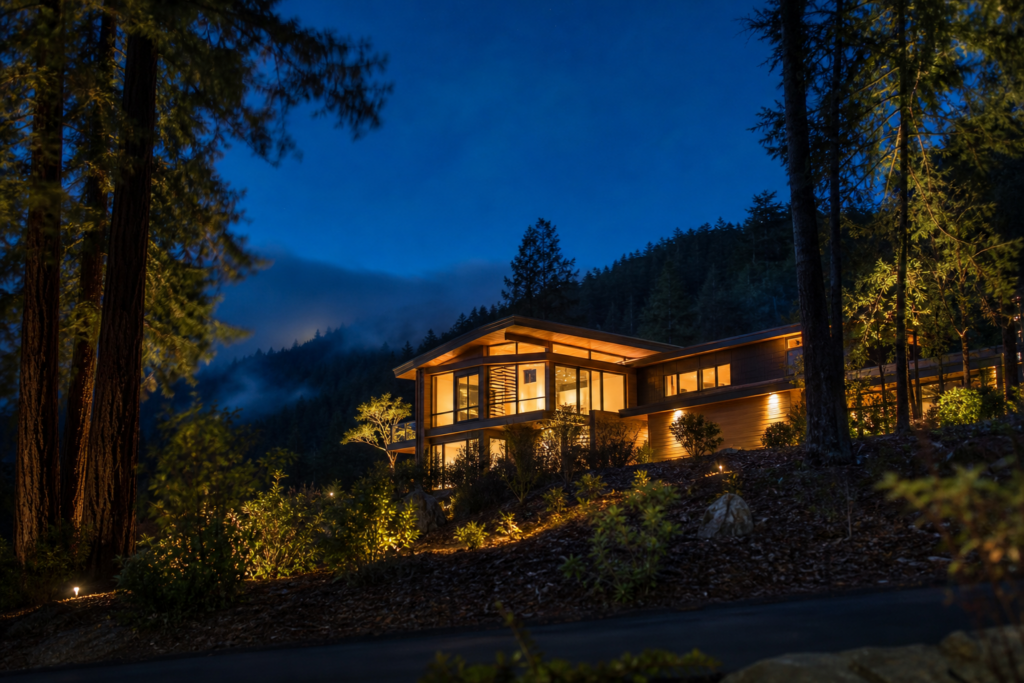
Your guest mix shapes your entire pricing strategy, and Scotts Valley’s geography creates a distinct demand profile. The city sits along Highway 17, the primary corridor between Silicon Valley and the Santa Cruz coast. That location supports two traveler segments:
- Leisure travelers: Visitors drawn to the Santa Cruz beaches, redwood forests, and hiking trails.
- Business travelers: Silicon Valley professionals who prefer a mountain setting over a highway hotel, contractors working in the Santa Cruz area, and remote workers looking for a short-term change of scenery. These guests may book mid-week or for longer stays, though booking patterns and rate levels specific to Scotts Valley should be confirmed through platform analytics before building a revenue model.
Understanding which segment your property serves helps you project revenue more accurately. A home with outdoor space near the redwoods might appeal to leisure travelers. A property with reliable Wi-Fi and a dedicated workspace closer to town might capture the business segment.
However, without Scotts Valley-specific nightly rate and occupancy data from authority sources, you should be cautious about projecting specific yields. The regulatory environment is the gating factor here, not the demand. Confirm you can legally operate before you model revenue.
Frequently Asked Questions About Scotts Valley STR Investment
Is Scotts Valley subject to the Santa Cruz County STR ordinance?
No. Scotts Valley is an incorporated city and administers its own municipal code. The Santa Cruz County LCP amendment reviewed by the California Coastal Commission in April 2026 was proposed for the unincorporated coastal zone, not for Scotts Valley, and its final adoption status should be verified before relying on its provisions. You need to check the City of Scotts Valley’s specific regulations before purchasing.
Do STR permits transfer when you buy a property in Santa Cruz County?
Under the unincorporated county rules, STR permits are associated with the property owner and do not transfer upon sale. While Scotts Valley may have its own policy, you should verify permit transferability directly with the city and factor any applicable timeline and cost into your acquisition plan.
What are the quiet hours for STRs in unincorporated Santa Cruz County?
The county LCP amendment establishes mandatory quiet hours between 10:00 PM and 8:00 AM, per the April 2026 California Coastal Commission report. Scotts Valley may set its own hours. Check the city’s municipal code for specifics.
Can you operate an STR in an ADU in Santa Cruz County?
Under the unincorporated county rules, STRs are prohibited in accessory dwelling units and on properties where ADUs are located. This applies to unincorporated areas. Scotts Valley’s city-specific rules should be confirmed separately, but this restriction signals a broader regional trend.
What is the median home price in Santa Cruz County as of 2026?
The median sales price for existing single-family detached homes in Santa Cruz County was $1,370,000 as of August 2026, per C.A.R., down 1.9% from the prior year. Scotts Valley, as an inland community, may differ from this county-wide figure.
How much income do you need to buy at the Santa Cruz County median?
You need a minimum qualifying annual income of $332,400 to purchase at the Q3 2026 median home price of $1,305,000 in Santa Cruz County, according to C.A.R.’s Housing Affordability Index. Only 16% of county households meet that threshold.
What is SB 346 and how does it affect Scotts Valley STR investors?
SB 346, California’s Short-Term Rental Facilitator Act enacted in 2025, allows local agencies to require platforms to report listing addresses and display local license numbers. It does not preempt local ordinances, so Scotts Valley can set its own rules on top of the state framework.
How competitive is the Scotts Valley investment property market?
With only 4.6 months of inventory and a median of 15 days on market across Santa Cruz County as of August 2026 per C.A.R., the market remains competitive. Investment properties in Scotts Valley may face bidding competition from primary-residence buyers as well.
What types of guests book STRs in Scotts Valley?
Scotts Valley draws both leisure travelers heading to the Santa Cruz coast and redwood forests and business travelers using the Highway 17 corridor between Silicon Valley and the coast. Your property type and amenities will determine which segment you capture.
Should you budget for Transient Occupancy Tax in Scotts Valley?
Yes. California law allows local jurisdictions to collect TOT on short-term rentals. You should confirm Scotts Valley’s current TOT rate with the city and include it in your operating expense projections. Platforms may be required to collect and remit TOT on your behalf depending on local ordinance.
The Bottom Line on Scotts Valley Short-Term Rental Investment
Scotts Valley offers real structural advantages for STR investors: a location bridging Silicon Valley and the coast, and a county where only 16% of households can afford the median-priced home (per C.A.R., Q3 2026), which keeps many local households renting. But the regulatory landscape is the gating factor. You must confirm Scotts Valley’s city-specific STR permit rules, TOT requirements, and ADU policies before committing capital.
If you are evaluating Scotts Valley investment properties and want to understand exactly what you can and cannot do with a short-term rental, reach out to Mario Desantis, Founder of Desantis Realty Group and REALTOR with Coldwell Banker Realty (CA DRE #02119587). With 413-plus Google reviews at a 5.0-star rating and deep experience in Santa Cruz County real estate, Mario can help you run the numbers that actually matter. Call (831) 291-0511 or visit desantisrealty.com to start the conversation.
Mario Desantis, REALTOR®, Coldwell Banker Realty, CA DRE #02119587. Equal Housing Opportunity. This blog does not constitute legal, tax, or lending advice. Consult a licensed professional for guidance specific to your situation. Any valuation opinions expressed are not appraisals and do not guarantee a specific price or outcome.
